
A letter lands on the mat and nobody is home: smart glasses for blind people can read it aloud, but RNIB says they are not mobility aids, so they supplement a cane rather than replace one.
Assistive glasses are a separate category from immersive hardware, so anyone weighing wearables more broadly may also want our best vr headset uk guide.
Specialist glasses compared with mainstream ones
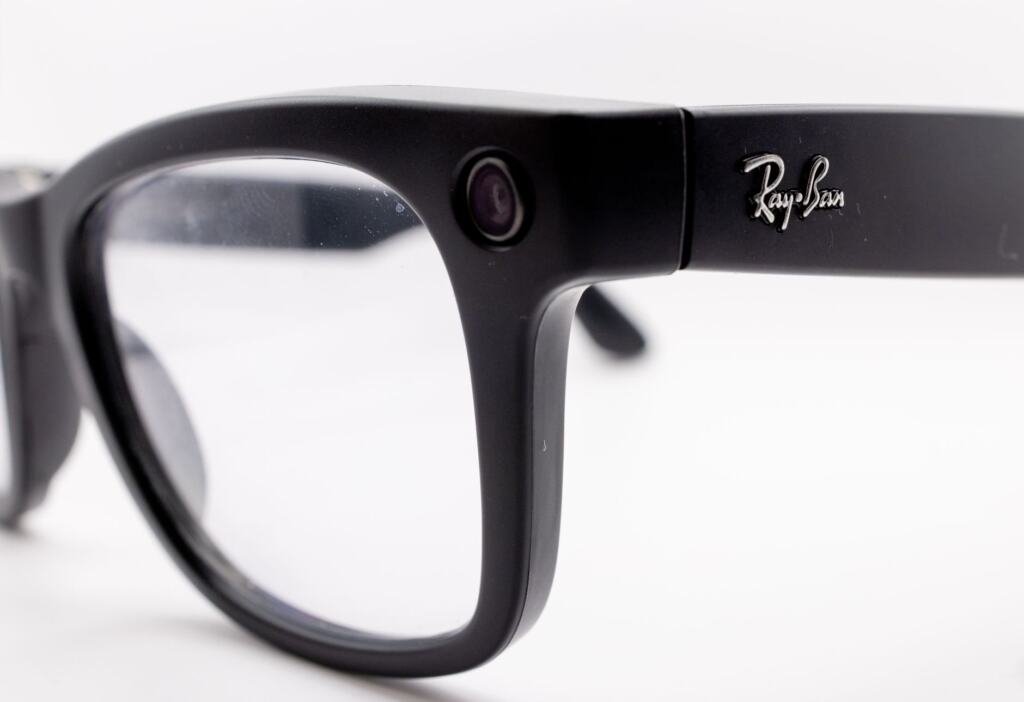
The first misunderstanding is that smart glasses are a single product type. RNIB’s guide to wearable technology, smart glasses and head-mounted cameras lists purpose-built assistive devices. Ray-Ban Meta glasses are a mainstream product, and a review from the American Foundation for the Blind states that they were not designed for low vision or blind users. That difference drives price, features and how much help you get.
| Device | Designed for blind users? | What it offers | Listed price | Planning use |
|---|---|---|---|---|
| OrCam MyEye 2 | Specialist assistive device | Standalone clip-on camera; reads printed text; recognises faces once it has learned names | £3,500 ex VAT (MyReader 2, a simpler text-reading version: £2,700 ex VAT) | Suits someone who wants a self-contained reader without relying on a phone |
| Envision Glasses | Specialist assistive device | AI text reading, scene description, facial recognition and video calls | £2,695 ex VAT | Suits someone who wants reading plus scene description and human help in one device |
| Ray-Ban Meta | No, mainstream glasses | Hands-free volunteer calls to Be My Eyes and Aira through the Meta AI app | Starting under $300 USD (dollar price) | Suits a low-cost trial of hands-free visual help, with limits |
Device descriptions and the OrCam and Envision prices come from RNIB’s wearable technology guide, and the Ray-Ban Meta details come from the American Foundation for the Blind review.
- Envision Glasses: RNIB says they use AI to scan and read text and to provide scene description and facial recognition. The manufacturer’s Envision Glasses page says the Home and Professional editions include calling Aira, a human visual-assistance service.
- OrCam MyEye: The MyEye 2 works as a standalone camera that clips onto glasses. The MyReader 2 is the cheaper option if reading is all you need.
- Ray-Ban Meta: Be My Eyes and Aira can both be connected through the Meta AI app and used hands-free. The Be My Eyes AI does not work on these glasses, and only calls to volunteers are supported.
Where the glasses stop: mobility
The most overstated claim is that smart glasses can guide you along a street. RNIB states plainly that these devices are not intended for use as mobility aids. The American Foundation for the Blind review adds that Meta AI is not yet able to provide reliable navigation directions.

The practical decision follows from that. Keep your existing mobility method for getting around, and use the glasses for tasks where a pause is acceptable, such as reading post, checking a label or asking what is in front of you.
Reading text and recognising faces
Text reading is the stronger skill
Reading printed text is the function the specialist devices are built around. Envision lists Instant Text, Scan Text and Batch Scan as its reading modes, and says its glasses handle handwriting in over 60 languages. Its Ask Envision feature lets blind or low-vision users scan documents and ask questions using GPT-5 by OpenAI.
Mainstream glasses are weaker here. A low-vision review on prrf.org says Ray-Ban Meta glasses can struggle with images or graphics.
Face recognition needs setup and performs less well
Face recognition is not automatic. RNIB says the OrCam MyEye 2 can recognise faces once it has learned people’s names, so you or a helper must teach it first.
A trial in India offers a rough guide to how the two skills compare. It recruited 90 participants from five vision rehabilitation centres. 72.9% reported a positive experience with the reading function, against 36.5% for face recognition. The device tested was the SVG from SHG Technologies in Bangalore, not a product on RNIB’s UK list. Treat the result as a pattern, not a UK buying guide: if reading matters most, favour a device built for it; if recognising people matters most, test that feature in person first.
UK prices, VAT and funding
RNIB’s listed UK costs are £3,500 ex VAT for the OrCam MyEye, £2,700 ex VAT for the OrCam MyReader and £2,695 ex VAT for Envision Glasses. Because these exclude VAT, ask the supplier for the final figure before you compare them with anything else. Ray-Ban Meta glasses start at less than $300 USD, a dollar figure rather than a UK price.
The Envision price is not the only cost to plan for. The manufacturer quotes $699 USD to upgrade from the Read Edition to the Home Edition, and a feature-update subscription at $200 USD per year. The Home Edition is the one that includes Aira calling. A reviewer on prrf.org describes the Envision price as high and says the glasses need some learning time.
Cost is a real barrier. The Indian trial notes that low affordability is one of the barriers to acceptance of devices. Before paying in full, ask your supplier and RNIB what support might apply to your circumstances, and settle which edition and subscription you actually need.
Where to try them in the UK
Start with RNIB’s guide, which lists the wearable devices it covers. For Envision Glasses, RNIB names Sight and Sound as the UK supplier, so that is the place to ask about a demonstration. At this price, trying before buying is sensible.
Ray-Ban Meta glasses are mainstream, and the American Foundation for the Blind review describes them as often available locally.
When you try any pair, bring real tasks: a letter, a food label and a screen you use daily. Check how much each device depends on a phone, and whether you would use the human-help services regularly.
Hardware worn on the face needs routine upkeep. Our guide How To Clean Your VR Headset Safely: A Step-By-Step Guide For 2026 – Viarama covers headsets, so follow the maker’s own advice for glasses. Anyone curious how face-worn weight is judged across wearables can read The Lightest VR Headsets In 2026: Ultra‑Portable Picks For Comfort And Mobility – Viarama.
Frequently asked questions
| Question | Answer |
|---|---|
| How long do the batteries last? | Envision gives 5-6 hours with regular usage. The American Foundation for the Blind review says Ray-Ban Meta glasses run for about four hours of moderate use, so plan charging around a full day out. |
| Do I need a smartphone? | For Ray-Ban Meta, yes. The same review says a basic level of comfort with a smartphone or tablet is still required. |
| How heavy are Envision Glasses and what camera do they use? | The manufacturer says they weigh less than 50 grams in total and have an 8 MP camera with a wide field of view. |