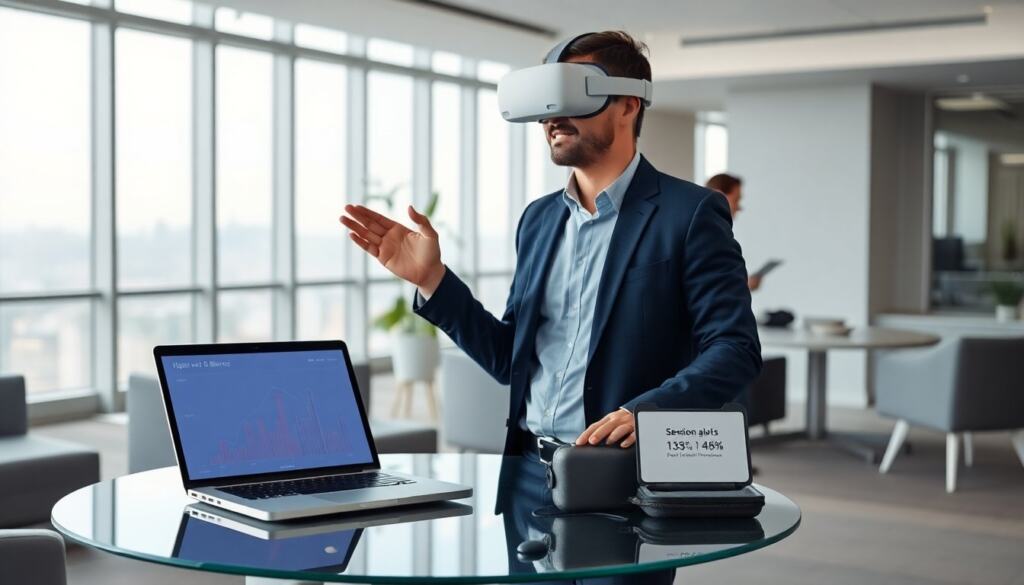
The lightest VR headset matters for comfort and travel. The lightest vr headset reduces neck strain and extends session time. This guide compares weight, balance, and features. It helps readers pick a model that suits daily use, travel, or mixed reality work.
Key Takeaways
- The lightest VR headset enhances comfort by minimizing neck strain and extending session lengths, making it ideal for prolonged use or travel.
- Weight distribution and balance are crucial; a well-balanced VR headset feels lighter than one with lower weight but poor weight placement.
- Compact standalone headsets offer wireless convenience and mobility, often representing the lightest VR headset category with trade-offs in battery life and graphics.
- Heavier headsets increase fatigue and tracking issues, so opting for a lighter model improves focus and reduces recalibration during movement.
- When choosing the lightest VR headset, prioritize use case, balance, tracking capabilities, and accessories like rear batteries or improved straps for the best experience.
What Makes A VR Headset Truly ‘Light’ — Beyond The Gram Count
Weight is only one measure of how light a headset feels. A light headset still can feel heavy if the weight sits on the face. Engineers shift mass to straps or rear modules to lower perceived weight. Padding and fit change pressure points and comfort. Materials and internal layout reduce bulk without changing grams on the spec sheet. Battery placement affects balance and session length. The term “light” should cover both physical grams and perceived strain during use. Buyers should read tests that measure pressure and balance as well as raw weight.
Perceived lightness depends on a few interacting design choices:
- Head strap architecture – halo and rear-strap systems move load away from the face.
- Lens and electronics packaging – compact optics and tightly routed wiring lower forward moment.
- Materials – thinner plastics or composite shells can shave bulk while preserving rigidity.
- Modularity – removable batteries or optional rear counterweights let users tune balance for comfort.
Because perceived burdens depend on head shape and use pattern, the same headset can feel very different from one person to another. When researching the lightest vr headset, emphasize reviewers who report on redistributing mass and on-session comfort rather than just listing grams.
Top Lightweight Headset Categories And Representative Models
Light headsets fall into clear categories. Each category has trade-offs in power, tracking, and portability. The right category depends on how and where a user plans to use the device.
Broadly, the market breaks down into several practical groups that tend to include the lightest VR headset options within their segment:
- Compact standalone headsets — self-contained units that prioritize mobility and low mass over top-tier GPU performance.
- Mobile-phone-based shells — very light shells that rely on a phone for compute; these are rare today but remain among the lightest by raw weight.
- Tethered lite PC headsets — reduced feature sets and streamlined housings minimize weight while retaining higher-end graphics via a cable.
- Dedicated mixed-reality glasses — ultra-compact designs that trade wide field-of-view for extreme portability and minimal weight.
When comparing representative models within those categories, look at how manufacturers balance the trade-offs: cooling solutions that add mass versus fanless designs that may throttle; whether a lighter enclosure sacrifices speaker quality; and how tracking is implemented (inside-out vs external sensors) because that affects accessory needs and setup complexity.
Compact Standalone Headsets: Small Form Factor, Big Mobility
Compact standalone headsets pack compute into a small shell. Users get wireless freedom and low setup time. Models in this class often target the lightest vr headset market. They trade top-tier graphics for lower weight and simpler cooling. Battery life ranges from two to five hours depending on use. These units suit commuters, casual players, and demo setups that require quick wear and removal. They also pair well with cloud-streaming to offset local hardware limits.
Design patterns common to successful compact standalone headsets include:
- Integrated, efficient SoCs that deliver acceptable visuals with minimal heat and weight.
- Optimized straps and face interfaces that push weight rearward and reduce facial pressure.
- Low-profile audio and input solutions that avoid heavy external attachments.
Practical considerations for shoppers: battery hot-swapping or optional external battery packs can extend sessions without carrying a permanently heavier unit; removable face cushions make for easier cleaning during travel; and detachable controllers reduce carry bulk when only passive viewing is needed.
How Weight Impacts Comfort, Tracking, And Session Length
Weight affects comfort directly. Heavier headsets increase facial pressure and neck fatigue. Fatigue shortens usable session time and reduces focus. Weight also affects tracking when the headset shifts during motion. Sudden shifts cause recalibration or tracking loss in some systems. Lighter headsets reduce these events and let users play or work longer. But, very light designs sometimes cut features like advanced cooling or larger batteries. Buyers should trade off endurance and features against the desire for the lightest vr headset.
Specific ways weight interacts with other factors:
- Comfort — sustained pressure points (bridge of nose, cheekbones) can cause soreness; redistributing to the crown/back reduces these problems.
- Tracking stability — mass that shifts under motion can produce jitter or slip, worsening controller/hand tracking and breaking immersion.
- Session planning — lighter units encourage longer continuous use, but limited battery or reduced cooling may force more frequent breaks.
- Accessory choices — adding a high-capacity rear battery increases weight but often improves overall comfort by improving balance.
For active use cases like fitness or room-scale gaming, prioritize headsets designed for dynamic motion with secure straps and proven tracking; for seated productivity sessions, a slightly heavier but better-cooled headset may be preferable if it reduces thermal throttling and maintains visual clarity.
How To Choose The Lightest VR Headset For Your Use Case
First, define primary use: travel, gaming, fitness, or productivity. Second, prioritize balance over raw grams. A well-balanced headset often feels lighter than a lighter but front-heavy model. Third, check tracking method and accessory support. Some light headsets limit external tracking accessories. Fourth, test fit if possible. Retail demos or friends give a fast reality check. Fifth, read independent reviews that measure face pressure and session time. Finally, consider accessories such as rear batteries or improved straps to turn a good headset into the lightest vr headset experience for the user.
Use this quick checklist when deciding:
- Primary scenario: travel, mixed reality work, gaming, or fitness?
- Balance vs grams: does the design move weight to the skull/strap rather than the face?
- Battery and endurance: can you extend sessions without adding unacceptable weight?
- Tracking needs: does your use case require external sensors or will inside-out tracking suffice?
- Accessory ecosystem: are there lighter replacement straps, counterweights, or third-party pads available?
- Try before you buy: schedule a demo or borrow a unit to assess real-world comfort across a 30–60 minute session.
Deciding on the lightest vr headset should be a balance of subjective comfort testing and objective feature needs. Shortlisting a few units from the appropriate category, trying them with the exact content you plan to use, and testing with the accessories you intend to carry will yield the best long-term satisfaction.