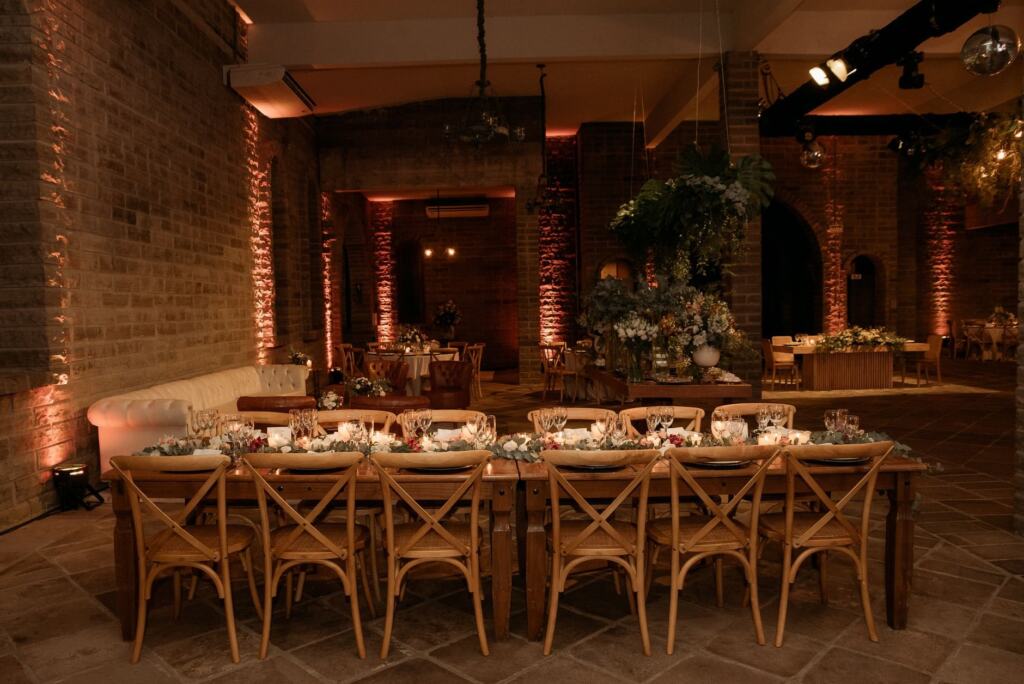
An immersive dining experience is a meal combined with theatrical or technological elements, such as storytelling, projection and sound, so the room becomes part of the menu. It works only when every cue serves one theme.
It sits within the wider range of immersive experiences uk operators offer. For the broader definition of immersion, see Immersive Experience: What It Really Means And Why It Matters In 2026 – Viarama.
What an immersive dining experience involves
An immersive dinner treats the meal as one part of a staged experience. Glutto Digest defines experiential dining as a meal combined with an out-of-the-ordinary experience, and notes that it can be fully or semi-immersive. Grubhub’s guide describes immersive dining as combining culinary and theatrical elements to create a multisensory experience.
The range is wide. At one end, dining in the dark has customers put on blindfolds and eat in a pitch-black room, so the room itself is the experience. At the other end, JOURNEY in New York uses 360-degree projections that move diners from the communal table to five exotic locations across the courses.
The distinction matters for planning. A semi-immersive dinner suits a first event or a small budget: one strong theme, one or two sensory layers, and a menu that fits them. A fully immersive dinner changes the whole room and needs a technical team, a script and rehearsal time.
How the sensory layers work together
Story, projected visuals and sound are the layers the reviewed formats lean on most. Each one gives diners a reason to notice the next course, so they work best when planned together rather than added one at a time.
Story first
Grubhub says stories create a framework for an immersive experience, with plot, cast, narration and food all supporting the same narrative. Epic Immersive Dining shows the model in practice: its narrator leads guests through a world-themed tasting menu in an immersive dining theatre, and a visitor review quoted on its site says every course represented the country it came from well. Decide the story before choosing equipment, because the story tells you what the lighting, visuals and sound should do.
Projection and visuals
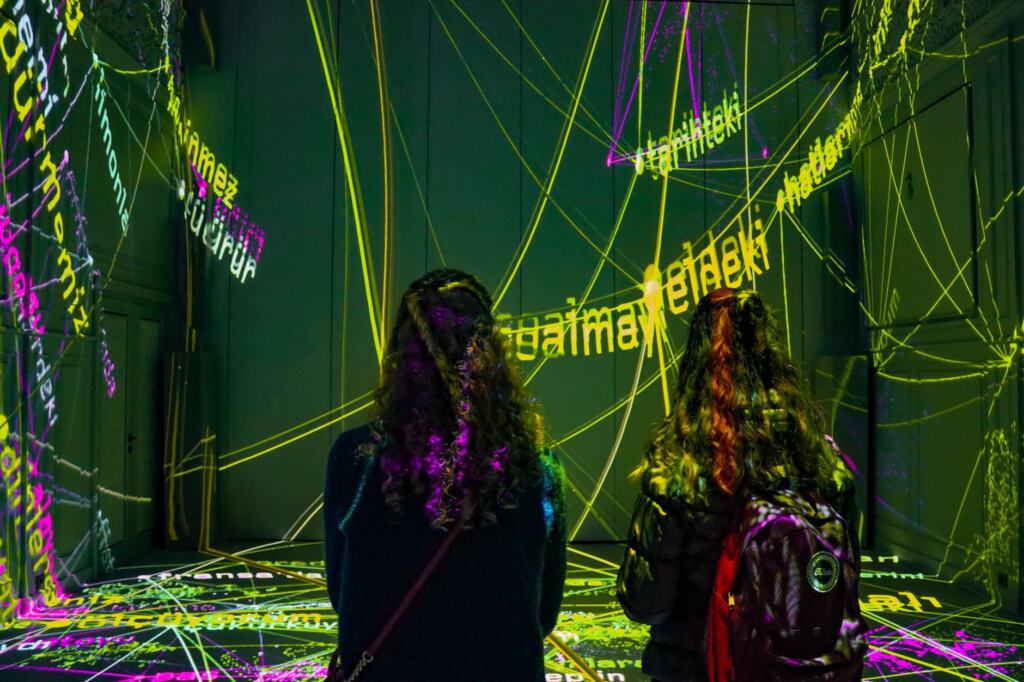
Multisensory dining commonly uses technology such as projectors, projection mapping and surround sound, according to Glutto Digest. Grubhub calls video projections especially popular because they can be shown on walls, ceiling and floor and are easy to change. That flexibility is the main practical argument for projection: you can reuse the same room for a different theme by changing the content rather than the furniture.
Projection can also be small. At a Le Petit Chef dinner at the Ritz-Carlton in Los Angeles, a tiny animated chef strolled around each guest’s plate before the course arrived, which ties the visual directly to the food. The same approach works for a home or venue table where the projection is aimed at the plate rather than the whole room. Projection Mapping Projector: How To Choose, Set Up, And Create Stunning 3D Projections In 2026 – Viarama covers choosing and setting up the projector itself.
Sound
Grubhub names sound as one of the best ways to enhance the event, with music and soundscapes shaping the atmosphere and how diners feel. Treat sound as a course-by-course decision: a change of track or soundscape signals a change of chapter, and it can do so without any visual equipment.
Participation and supporting layers
Interactive elements let guests take part in the show. According to Grubhub, they might interact with servers in character, join activities or physically move through the space. Participation raises the level of immersion, but it also raises the demands on staff, so keep it optional for guests who prefer to stay seated. Scent, tableware and texture are best used as supporting layers that echo the story rather than compete with the main visual or sound cue.
Planning an immersive dinner step by step
Plan the dinner as a sequence of chapters, with the menu, visuals, sound and staff all following the same running order. The steps below work for a home dinner or a venue.
- Choose the story and level of immersion. Decide whether the evening is semi-immersive, with one theme and a couple of layers, or fully immersive. Keep the theme to a single sentence the whole team can repeat.
- Write the menu as chapters. The Radiant Table in San Francisco runs a multi-course dinner by a different chef each night, while Epic ties each course to a country. Either way, each course should have its own place in the story.
- Pick the visual layer. Choose projection on the table, walls or ceiling, or a lower-cost augmented reality option, and test it in the actual room.
- Add sound and participation. Assign a soundscape to each chapter, then decide how much guests join in.
- Assign staff roles. At minimum you need someone to narrate or host, servers who understand the story, and someone to operate visuals and sound.
- Rehearse the full run. Run the whole evening once with food, cues and clearing, then adjust the order and handovers.
Sample run-of-show
A ticketed example gives a sense of scale: The Radiant Table lists about 2 hours per service for a projection-mapped, chef-led dinner. The structure below is a planning frame for any multi-course evening, not a timetable from a specific venue.
| Stage | What happens | Planning use |
|---|---|---|
| Arrival and welcome | Guests are seated and the host or narrator sets the scene | Keep visuals and sound at a quiet, neutral level until the story starts |
| Opening chapter | First course arrives with the first visual and sound cue | Use the first course to show guests how the evening works |
| Middle courses | Each course changes the visuals, soundscape or setting | Give every course one clear change, and avoid changing everything at once |
| Participation moment | Servers in character, an activity or a move to another space | Keep it optional and brief so food stays at the right temperature |
| Finale | Final course and closing narration | Return to simple lighting and sound so guests can talk |
The service length and multi-course format follow the Downtown SF listing for The Radiant Table, and the story and participation roles follow Grubhub’s immersive dining guide.
Equipment and budget
Spend first on one visual layer and good sound, then add specialist effects only if the story needs them. The equipment families named in the verified material are projectors or projection mapping, surround sound, augmented reality and laser projection.
- Lower-cost option. Grubhub lists augmented reality as a lower-cost technology: apps add animated characters or elements to a real location viewed on a smartphone. JOURNEY in New York takes the idea further with a café where augmented reality brings the dinner plates to life. It suits guests who are happy to hold a phone, which can interrupt eating and conversation.
- Core option. A projector for the table or walls, plus speakers, covers the two most commonly cited layers. Because projected content is easy to change, one setup can serve several themes.
- Specialist option. Grubhub names a specialist firm that designs full-color laser projections for immersive dining.
For price context, The Radiant Table’s tickets start at $175 per guest, in US dollars. That is a San Francisco reference for a projection-mapped, chef-led dinner, not a UK price. Work out your own per-head cost from equipment hire, staffing and food, and check each operator’s booking page for current ticket prices.
Where to try immersive dining, starting with London
Immersive dinners often run as pop-ups or limited seasons, so check the operator’s own page for current dates before planning a trip. Trying one first shows you which layers you want to copy.
- London pop-up. Gingerline’s Chambers of Flavour in London served guests a unique dish in five different rooms. It was a pop-up, and a fresh edition from the same operator is the thing to look for.
- Dinner in the Sky. This is a temporary dining format, described by Glutto Digest as appearing in temporary locations worldwide. Its location changes with each pop-up, so confirm where the current one is before booking.
- The Radiant Table, San Francisco. The tourism listing places it at One Market Plaza. It is a useful model for combining projection mapping, chefs and storytelling.
- Epic Immersive Dining, Fort Lauderdale. The venue site gives its address as 2031 Wilton Dr., Fort Lauderdale, Florida 33305. It is a good study of narration plus a country-themed menu.
- JOURNEY, New York. Villa Albertine gives its address as 27 West 24th Street, New York, NY, and it is the clearest example of full-room projection across courses.
Only the London pop-up is a UK reference here, so use the others as design models rather than travel suggestions. Compare how each one handles story, projection and sound, then borrow the layer that suits your room and budget.
Frequently asked questions
What is Dinner in the Sky?
It is a temporary pop-up dining format that appears in temporary locations worldwide, so its location changes with each run. Check the operator’s current listing for where and when it is open.
Do guests have to take part in the performance?
No. Participation is one option, not a requirement. Guests might interact with servers in character, join activities or move through the space, but a semi-immersive dinner can keep everyone seated and let the visuals and sound do the work.
Is augmented reality a cheaper alternative to projection?
Augmented reality apps add animated elements to a real location viewed on a smartphone. At JOURNEY in New York, augmented reality brings the dinner plates to life.