| Effect of immersion | What the evidence supports | Planning use |
|---|---|---|
| Attention narrows to the experience | Immersion can dramatically increase engagement but also lessen or cut off outside stimuli. | Treat awareness of your surroundings as a safety question when choosing a headset session. |
| Discomfort breaks the effect | Any discomfort or cybersickness hinders immersion. | Pick a gentler format, or stop, if a session makes you feel unwell. |
| Depth depends on the medium | AR and MR offer lower immersion than VR, which gives a deeper sense of immersion. | Choose VR for depth and AR or MR for a lighter, room-aware experience. |
| Outcomes count for more than realism | Organisations increasingly judge immersive work by what it accomplishes rather than how realistic it feels. | Judge an experience by whether it teaches, moves or informs you, not by graphics alone. |
Figures and claims in this table come from the Interaction Design Foundation’s immersion entry and the XRA’s analysis of transformative immersive experiences.
Immersive experience meaning comes down to absorption: an experience is immersive when it draws a person in so fully that attention narrows to it, whether through a headset, a projected room or live theatre.
For places and formats you can try, see our guide to immersive experiences uk.
Immersive experience meaning in plain terms
The Interaction Design Foundation defines immersion as the objective degree to which a user is fully drawn in and absorbed by an experience. A practical working definition follows from that: an immersive experience engages your senses and attention so completely that the surrounding room recedes. One industry definition describes it as fully engaging an individual’s senses and attention, often through VR, AR or 360 video.
Immersion is not a single technology. Academic work in Frontiers in Virtual Reality describes immersive technology as a spectrum, mainly AR, VR and MR, that blends and blurs interactivity and perception between the physical and digital domains.
It is also not limited to screens. The same IxDF entry notes that theatre, movies, theme parks and even books can be immersive, so a headset is a route to immersion, not a requirement for it.
What immersion changes for visitors and designers
The practical consequences matter more than the label. Absorption raises engagement, and the same absorption has costs you can plan around.
- Choose the intensity you want. VR gives the deepest sense of immersion, while AR and MR give less. If you want something light that keeps you aware of the room, an AR or MR format suits you better.
- Plan for reduced awareness. Immersion can lessen or cut off outside stimuli. That is the appeal of a good headset session and also the reason to use it in a space where you feel comfortable losing track of your surroundings.
- Expect comfort to decide the outcome. Cybersickness or discomfort hinders immersion, so a technically impressive experience can still fail for a person who feels unwell. Ease into unfamiliar formats rather than starting with the most intense one.
- Look past realism when comparing options. Photorealistic visuals help, but the XRA argues that the most successful immersive work is not created because someone wanted to use XR. It starts from a purpose, and technology serves that purpose.
Remo’s description of immersive events adds an emotional angle: they trigger the three drivers that have long made experiences stick, namely presence, emotion and memory. Presence, the feeling of being located inside the content or place, is therefore both a cause and a marker of a memorable experience.
Examples by technology type
Different technologies produce different kinds of immersion. Grouping them by medium makes the choices easier to compare.
VR and 360 video
Immersion refers to the objective degree to which a user is fully drawn in and absorbed by an experience. Valve’s Half-Life: Alyx is cited by the IxDF as a game that immerses players in the decaying Half-Life universe. A VR system, according to Helpshift’s overview, needs to give the user picture, sound and a complex of tactile and other sensations in real time. The IxDF adds that visually and audibly realistic environments, built with high-quality graphics and spatial audio, support immersion.
Entry-level routes exist. Google Cardboard, invented in 2014, is described as an analogue of modern virtual reality devices, and 360 video is a lighter way to look around a recorded scene.
AR and mixed reality
AR adds digital content to the real world, and its basis is an optical tracking system. Pokémon GO is the IxDF’s example of a popular social AR mobile game. Mixed reality goes a step further: virtual objects in it can affect the real world, which AR content generally cannot.
Projection mapping and immersive exhibitions
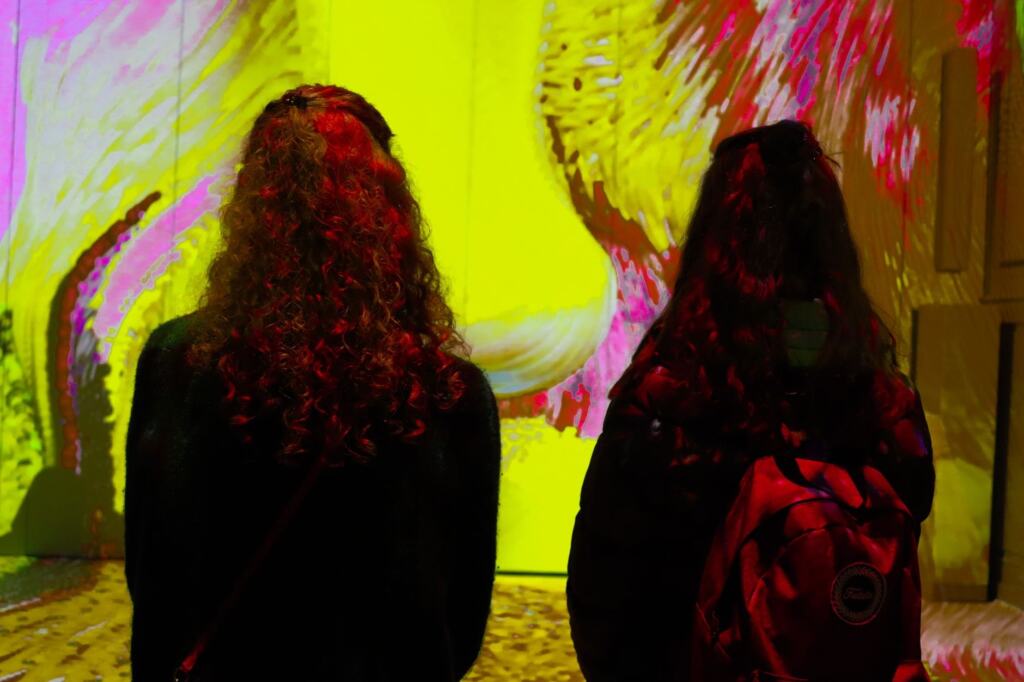
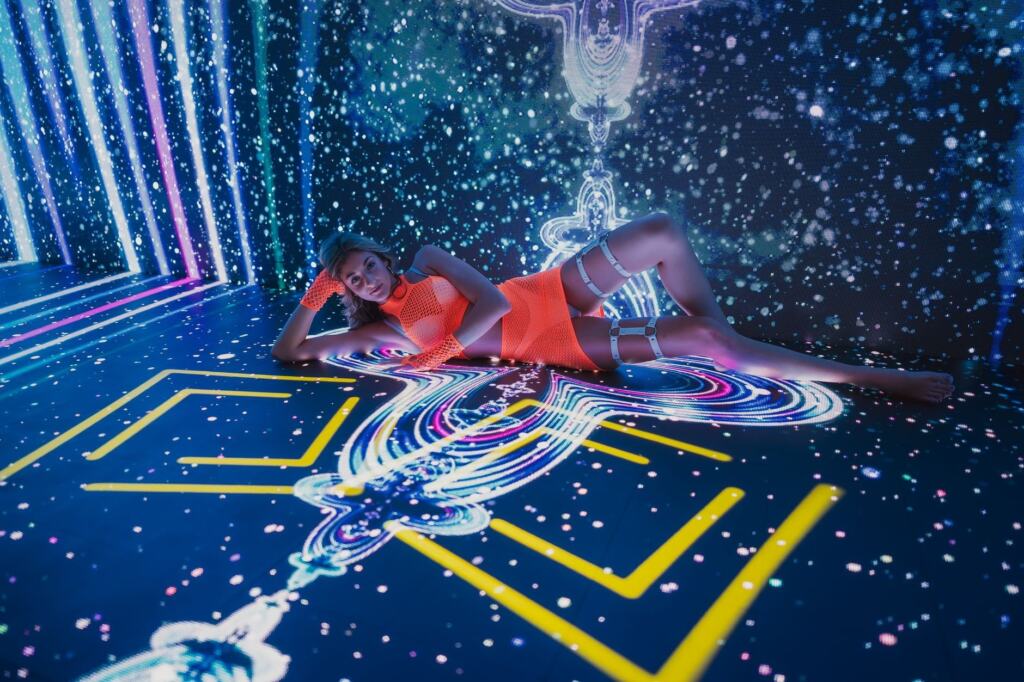
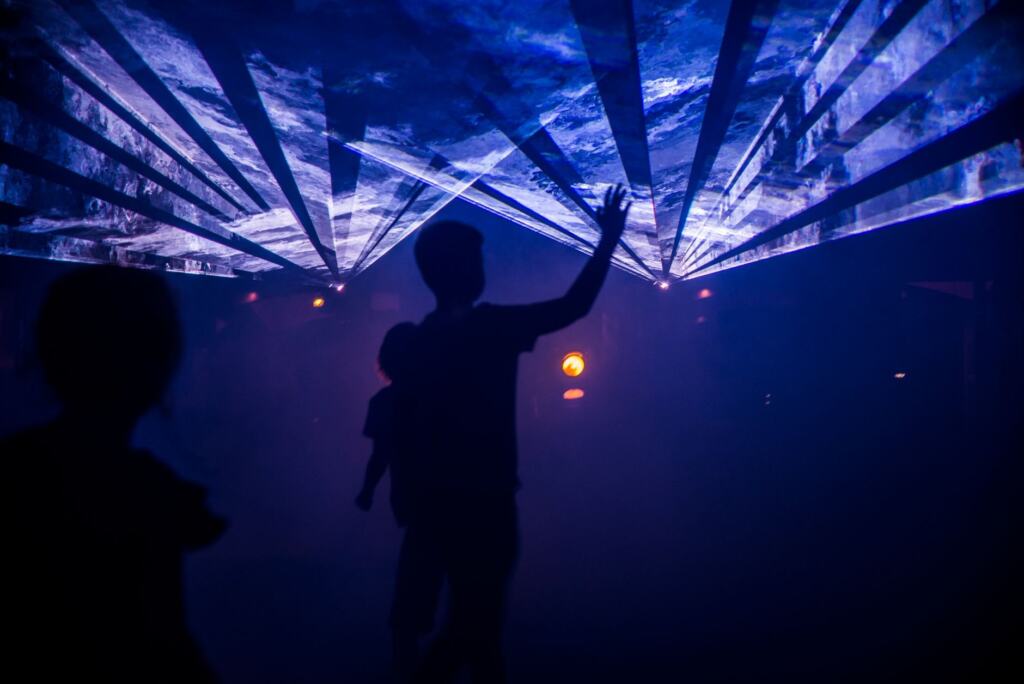
Projection mapping transforms blank walls into dynamic canvases, according to Remo, and it is the technology behind many walk-in light rooms and immersive exhibitions. Visitors do not wear anything, so the experience is shared and easy to enter, though the depth is closer to AR than to a sealed headset.
Immersive theatre and walk-through events
Escape rooms, immersive theatres and sensory museum installations invite full-body engagement. Secret Cinema and Sleep No More are cited as immersive theatres in London and New York, and a Stranger Things activation let fans walk through the Upside Down rather than just watch the story. Because these formats need no hardware, they suit people who find headsets uncomfortable.
Museums and culture
A review in Frontiers in Virtual Reality links VR in museums with improved visitor engagement and access to cultural content. If you want that at home, our guide to Virtual Museum Tours: How To Explore World-Class Collections From Home In 2026 – Viarama shows how collections are opened up remotely. For a food-led take on multi-sensory design, see Immersive Dining Experience: How To Design Unforgettable Multi‑Sensory Meals In 2026 – Viarama.
Training and simulation
Immersion is also used for serious purposes. In the Night Shift healthcare simulation, physicians who played the game showed lower rates of under-triaging severely injured older patients. In HoloLAB Champions, students practise laboratory skills in a virtual environment before entering a physical lab. Both are described by the XRA.
What creates immersion
Several ingredients recur across the sources. Realistic sight and sound matter, since high-quality 3D graphics and spatial audio support the sense of being inside a virtual environment. Real-time response matters, because a system that supplies sensation on cue keeps the illusion intact. Comfort matters, because discomfort undoes everything else.
Purpose matters as well. The XRA’s view is that the strongest experiences begin with a goal, and organisations are starting to evaluate them less by how realistic they feel and more by what they accomplish. For a visitor, that is a useful filter: ask what the experience is trying to do before you judge how advanced it looks.
How immersion is measured
The IxDF treats immersion as an objective quality, the degree to which a user is absorbed. Presence is the subjective counterpart, how strongly a person feels they are in the place. The two are related but not interchangeable, so a rich, realistic setup does not guarantee that a particular visitor feels present.
Research and industry now measure the effect in several ways. The Frontiers bibliometric review examined a dataset of 722 articles on immersive technologies in museums and found five interconnected thematic clusters, covering visitor experience across cognitive, emotional and behavioural aspects. That three-part view is a useful frame for any experience: what you understood, what you felt and what you did afterwards.
The XRA points the same way, measuring by outcomes. A training simulation can be judged by better decisions, a museum piece by engagement and access, and an entertainment piece by whether it leaves an emotional memory. When you try something yourself, use the same test: did it hold your attention comfortably, and did it leave you with something?
Frequently asked questions
Do I need a headset for an immersive experience?
No. Headsets deliver the deepest immersion, but projection-mapped rooms, immersive theatre, escape rooms and sensory installations also qualify, as do some non-digital media.
Is AR as immersive as VR?
Generally not. AR and MR sit lower on immersion than VR, though they keep you connected to the real room, which some people prefer.
What is the difference between AR and mixed reality?
In mixed reality, virtual objects can affect the real world, whereas AR overlays digital content on a view tracked by optical systems.
Can immersive experiences be used for more than entertainment?
Yes. Reported examples include a healthcare triage game and virtual lab practice for students, and museums use VR to widen engagement and access.