
| Point | What is supported | Planning use |
|---|---|---|
| Devices | Interconnected virtual communities reached through VR headsets, AR glasses, smartphone apps or other devices | Start with a device you already own. |
| Games | Most metaverse games can be played on a computer or mobile device; some also support VR headsets | Treat VR as an upgrade, not an entry fee. |
| Headset cost | A report from October 2021 put headsets at $300 or more | Try a platform on screen before budgeting for hardware. |
| Activities | Users can customise avatars, decorate virtual homes and buy digital assets | Set a spending limit before you buy anything. |
| Standards | Making a connected metaverse work requires competing platforms to agree on standards | Expect avatars and items not to move freely between platforms. |
These points come from a Los Angeles Times explainer and a guide to metaverse gaming.
What is a metaverse? It is a shared digital world where people appear as avatars to meet, play and work, reached from a computer or phone, with a VR headset as an optional extra, though today’s platforms mostly stay separate.
If you would rather try immersive technology in person than sign up to an app, the guide to immersive experiences uk is the practical next step. The sections below start with what you need to join in and what you can do there. They then explain how the pieces fit together.
Access and cost: what you need to start
You do not need a VR headset to get into most metaverse platforms. According to a metaverse gaming guide, most metaverse games can be played on a computer or mobile device. The same guide says only some offer support for VR headsets.
- Start on screen. A phone or computer lets you test whether shared virtual spaces appeal to you before you spend anything on hardware. This suits most first-time visitors.
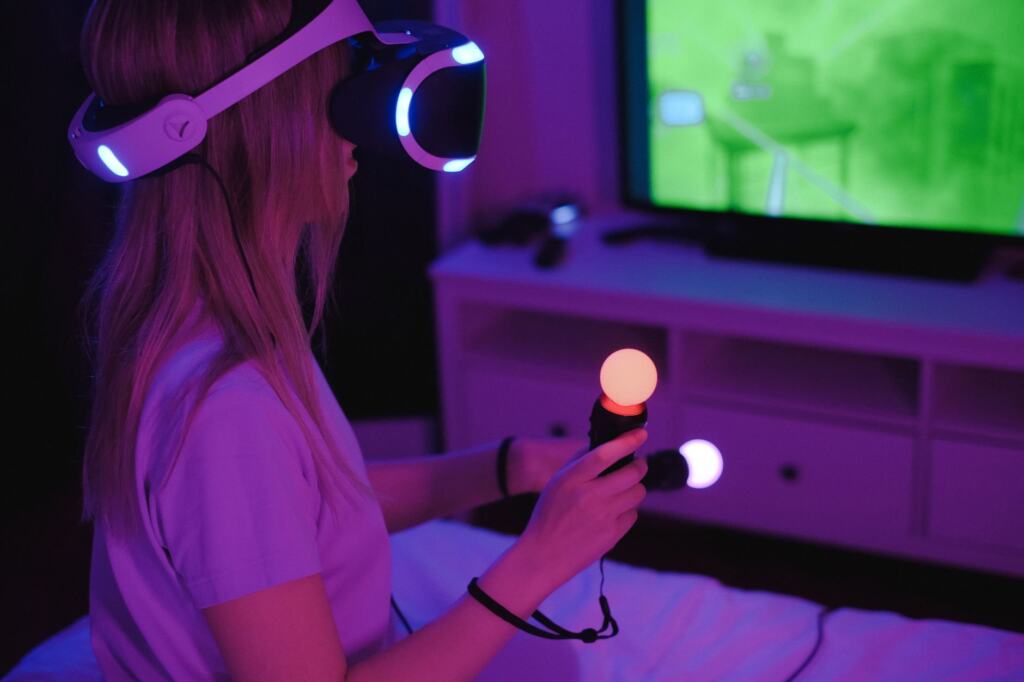
- Add a headset only for VR support. Where a game does support VR, the guide notes it needs a compatible headset and a powerful computer. A headset alone may not be enough, so check the computer side as well.
- Budget before you buy. Hardware such as VR headsets and AR glasses is described by a marketing glossary as expensive. A 2021 news report said headsets cost $300 or more, which put the most cutting-edge experiences out of reach for many. That is a dated US-dollar figure, so check current UK prices before you decide.
- Confirm on the platform’s own page. Requirements differ from one platform to the next, so read the device list on each platform’s official page before installing.
The practical rule is simple: wait for a reason to buy a headset. A specific VR-supported world you want to visit is a good reason. General curiosity is better served by a screen.
What you can do in the metaverse
On metaverse platforms, users can customise their digital personas, decorate virtual homes and purchase digital assets, as the gaming guide puts it. In practice, what you do depends on the platform, and the four named below lean in different directions.
Roblox
Roblox describes its vision as people coming together within millions of 3D experiences to learn, work, play, create and socialise, according to the Los Angeles Times explainer. It suits anyone who wants variety, because the platform is a catalogue of experiences rather than a single world.
Fortnite
Fortnite is a battle royale game that has also been used to host virtual concerts and events, as noted in this glossary. Its maker, Epic Games, has raised $1 billion from investors to help with its long-term plans for building the metaverse, the Los Angeles Times reported. Fortnite is the better fit if you want a game you may already know to double as a place to attend live events.
Meta Horizon Worlds
Horizon Worlds is a metaverse platform built by Meta, where users can play, interact and create their own worlds, per the same glossary. It suits people who want to build spaces as well as visit them.
Decentraland
Decentraland is described as a virtual world owned and operated by its users and built on a blockchain, again according to the glossary. It is the option to look at if user ownership is the part of the metaverse that interests you. Because digital assets can be bought on such platforms, read what any purchase involves before spending.

Is the metaverse still relevant?
Yes, but as a growing set of shared 3D worlds rather than one finished, connected place. The gaming guide says metaverse gaming is still in its early stages and that several challenges need to be solved. The same glossary names the lack of standardisation as one of the main hurdles.
That distinction should shape your decisions:
- Worth your time now if you want social play, events or creating worlds on platforms such as Roblox, Fortnite or Horizon Worlds. These exist today and work on ordinary devices.
- Worth waiting on if you expect one avatar, one wallet and one set of purchases to work everywhere. That depends on competing platforms agreeing a set of standards, which the Los Angeles Times describes as a requirement for making it work.
- Worth caution if you are considering a headset purely for the metaverse. The hardware is expensive, and the experiences it unlocks are not yet consistent across platforms.
The name may fade or change, but the underlying idea is already in daily use in games. Judge it by what you can do on a platform this week, not by the promise of a unified future.
How a metaverse works under the surface
A metaverse is described as a virtual space where users interact through avatars in a shared digital world, according to this explainer. Three things have to come together: an avatar that represents you, a shared space where other people appear in real time, and a device that connects you to it.
The device can be a VR headset, AR glasses, a smartphone app or something else, as the Los Angeles Times notes. That flexibility is why a laptop and a headset can both count as a way in.
Interoperability
Interoperability is the idea that users can transfer assets and data across different platforms and virtual environments, in the words of the same explainer. It is the feature that would turn a collection of separate apps into something closer to a single metaverse. Today it is limited by the absence of shared standards, so treat any promise of fully portable avatars and items with caution until the platforms involved confirm it.
Ownership
Ownership is handled differently depending on the platform. Decentraland presents itself as user-owned and blockchain-based, while Roblox and Horizon Worlds are described as platforms where people create within the company’s environment. The choice matters if you plan to build or buy things you want to keep.
Trying immersive spaces in the UK without a headset
Not every immersive experience involves an avatar or an account. If the appeal is being surrounded by a digital image, the planetarium uk guide points to dome shows you can visit. At home, the walkthrough on DIY Projection Mapping At Home: Create Stunning Wall And Object Shows In 2026 – Viarama shows how to turn a wall or object into a display. Both are a low-cost way to find out how much you enjoy immersive visuals before you commit to a headset.
Frequently asked questions
Who first used the word metaverse?
Neal Stephenson coined the term in his 1992 science fiction novel Snow Crash, according to this explainer.
Why is Meta so closely linked to the metaverse?
In October 2021, Facebook’s parent company changed its name to Meta Platforms Inc., a move the Los Angeles Times reported as signalling its focus on the metaverse. Meta also built Horizon Worlds.
Is VR the same thing as the metaverse?
No. VR headsets are one way to reach virtual communities, alongside AR glasses, smartphone apps and other devices. The metaverse is the shared world, and VR is one of several ways in.
Can I take my avatar or items from one platform to another?
Not reliably today. That portability is what interoperability means, and it depends on competing platforms agreeing on standards. Check each platform’s own rules before assuming anything will transfer.