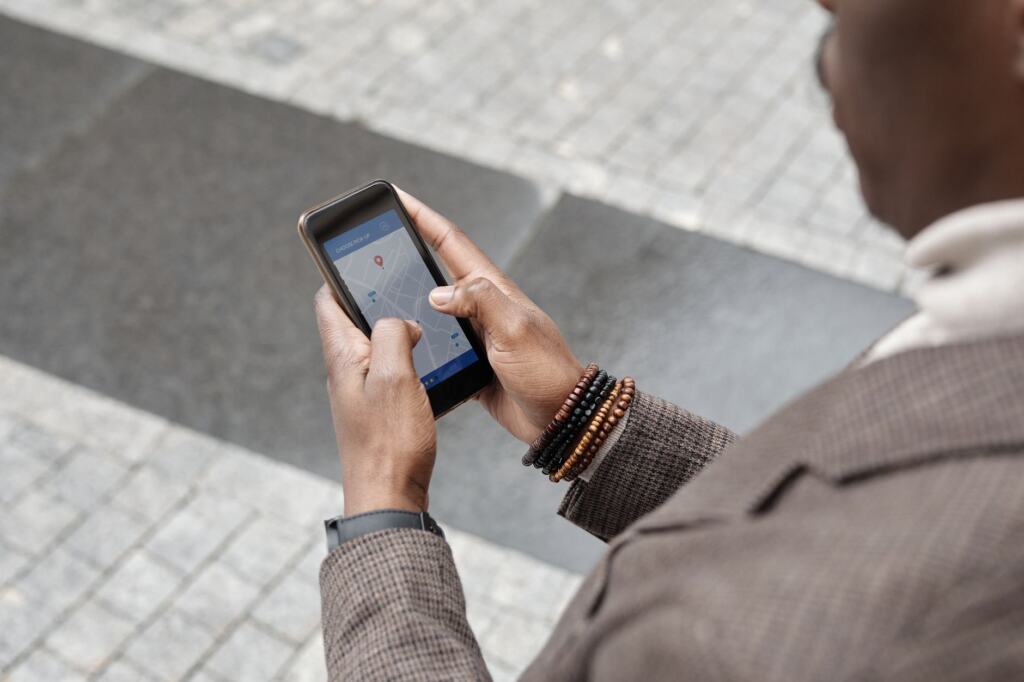
Phone maps and bin sensors do not make a city smart on their own. The smart city definition is the integration of technology, data and people to improve daily urban life, and it describes a process, not a gadget count.
Smart cities also raise questions about screens, immersion and wellbeing. Our guide to is vr bad for you covers the personal-health side of immersive technology, while this page explains the city-scale systems behind it.
Smart city definition: what the standards and researchers say
No single wording is universal, but the main definitions agree on integration. The British Standards Institution (BSI) describes a smart city as the effective integration of physical, digital and human systems in the built environment, as quoted by Centre for Cities. The Institute of Electrical and Electronics Engineers (IEEE) says smart cities strive to bring together government, commerce, society and technology. A University of Central Florida (UCF) researcher puts it most plainly: integrate technology to remove the negatives of daily life.
Those wordings share a test you can apply to any project: does it connect systems and people, and does it improve something residents notice? A city with many sensors but no shared platform or public purpose fails that test. The table below sets the most common misunderstandings against what the definitions say.
| Common assumption | What the definitions say | Planning use |
|---|---|---|
| A smart city is a list of gadgets | The BSI wording stresses effective integration of physical, digital and human systems in the built environment | Ask how a new device connects to existing services and to the people who run them |
| A smart city is a finished state | The Department for Business, Innovation and Skills (BIS, 2013) considers smart cities a process rather than a static outcome | Judge projects on continued improvement, not a launch event |
| Technology is the goal | UCF frames technology as the means of removing the negatives of daily life | Start from the resident problem, then choose the tool |
| Everyone means the same thing by the term | Centre for Cities finds the term poorly defined, which creates confusion for UK cities | Read the definition each project uses before comparing it with another |
The BSI and BIS wordings are quoted in Centre for Cities’ review of smart cities, and the daily-life framing comes from UCF’s explainer.
Technologies that make a city smart
Technology is the connective tissue rather than the headline. UCF describes it as the connective tissue between every project in a smart city, and Centre for Cities notes that most definitions treat new technologies, usually information and communication technology (ICT), and data as the means of solving urban challenges.
- IoT sensors and devices. IEEE explains that Internet of Things (IoT) devices and systems generate continuous data that help build real-time context. That data comes from sensors, cameras and other devices through open, flexible platforms.
- Connectivity. ICT is commonly described as the backbone linking a city’s elements, which is why a sensor that cannot reach a shared platform adds little.
- Service-specific sensing. Smart waste sensors measure how full bins are, so collection routes can follow need rather than a fixed round. In Taipei, citizens can obtain real-time information on temperature, humidity and air quality.
- Reference models. The IEEE 2413-2019 standard provides a reference model defining relationships among IoT verticals such as transportation and healthcare. It is useful when different departments buy different systems.
- Connected vehicles. UCF’s research envisions autonomous vehicles using sensors to transmit messages to each other and to the infrastructure. This is a research vision, not a description of a deployed system.

UK examples: top-down platforms and bottom-up data
Centre for Cities separates UK projects into two styles. The top-down style integrates data from different kinds of sensors, such as smart meters and CCTV cameras, into a single virtual platform. Glasgow’s planned Integrated Operation Centre is the UK example given. It was described as a plan, with no outcome reported.
The bottom-up style opens data to the public. Centre for Cities cites open data platforms in London, Bristol and Leeds. It also reports that Bristol residents use smart meters to become more aware of their energy consumption and save money, which is a stated outcome without a figure. Peterborough’s Visual Career Pathways project is an online platform matching skills with business needs, showing that a smart city project need not involve physical sensors at all.
The practical reading is that smart city labels cover very different projects. A control-room platform suits a city that wants coordinated operations. Open data suits one that wants residents and local developers to build on the information.
Where digital twins and AR fit
Digital twins and augmented reality (AR) are the immersive layer of a smart city, but they depend on the plumbing described above. A digital twin is a virtual model of city assets, and it is only as useful as the live data feeding it. IEEE’s point that IoT systems generate continuous data to build real-time context is the data supply that makes such a model worth watching.
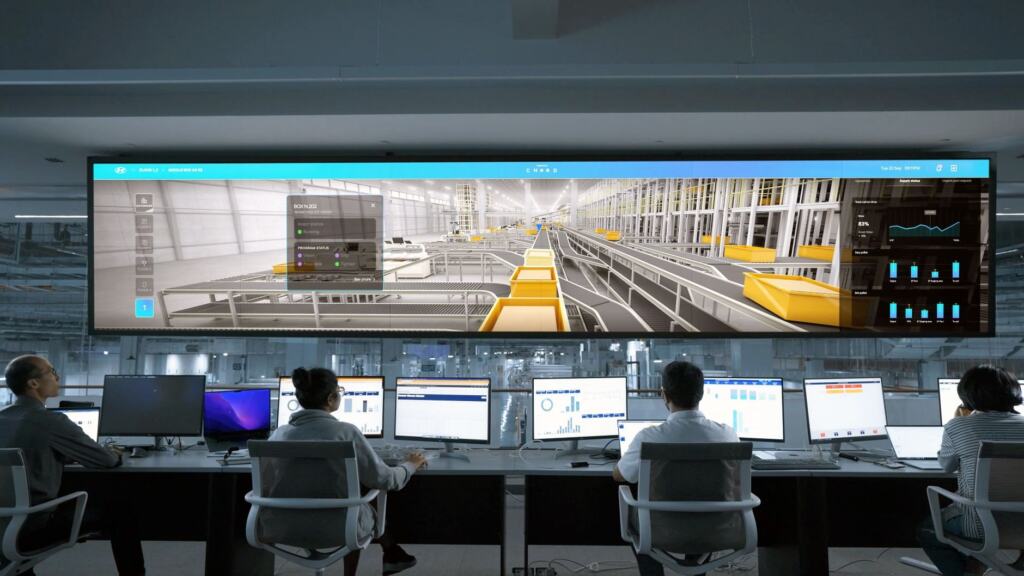
The evidence for the immersive layer is stronger on research than on measured city results. UCF cites a history of groundbreaking research in AR, virtual reality (VR), digital twinning, modeling and simulation. That supports treating these tools as promising ways to see and explain a city, not as proven requirements of the definition.
AR wayfinding for residents
AR wayfinding is the part of a smart city a resident touches directly: directions presented on a phone as the person moves through the street. Basic map navigation already works this way, and AR adds a visual layer on top. Because it relies on a phone’s camera and location, it raises the same data questions as any other connected service. For households weighing how much immersive or screen-based technology to adopt, does vr affect sleep looks at one health question, and Screen Time Rules For Kids: Practical, Age‑Friendly Limits Parents Can Use In 2026 – Viarama covers limits for children.
Privacy risks and data governance
The privacy risk in a smart city comes from the same feature that makes it useful: continuous data from sensors, cameras and devices. IEEE says that having data in a reliable framework that is easily accessible, usable, complete, trusted and secure is paramount. It also notes that security concerns about compromised devices have slowed deployment.
What good governance looks like
- Trust as a design requirement. The IEEE 2413 framework treats trust as including protection, security, privacy and safety, so privacy is part of the architecture, not an add-on.
- Owner control of personal data. IEEE’s P1451-99 project describes a means for the owner of devices to protect their personal information.
- Procurement and inclusion. BSI’s Smart Cities Framework sets out principles on leadership and governance, including procurement and digital inclusion. That puts accountability on the city, not only on suppliers.
- Security alongside safety cameras. Cameras, sensors and video protection systems support public safety, and cybersecurity is meant to protect the information they exchange.
Residents can ask of any scheme what data is collected, who can access it and how devices are secured. A project that cannot answer is applying the label without the governance. Where a city offers a public dashboard or open data platform, that is a good place to check the answers.
Frequently asked questions
| Question | Answer |
|---|---|
| Does a city need AR or digital twins to count as smart? | No. The BSI and BIS wordings centre on integration and continuing improvement. AR and digital twins are tools within that, drawn from a research history that UCF links to AR, VR and modeling. |
| Which standards are relevant to smart city technology? | BSI’s Smart Cities Framework (PAS 181:2014) covers governance and procurement. IEEE 2413-2019 provides a reference model for IoT verticals. |
| What is the main security concern? | IEEE points to compromised devices, noting that this concern has slowed smart city deployment. |
| Are Glasgow’s and Bristol’s examples comparable? | Not directly. Glasgow’s Integrated Operation Centre is a planned, top-down platform. Bristol’s smart meters are a resident-facing example, where residents became more aware of their energy use and saved money. |