High screen time harms attention, sleep, and mood. This article explains what high screen time does to the brain and body. It shows how to measure true screen time. It gives simple strategies to cut screen use and keep what matters. The guidance fits daily life in 2026 and focuses on clear, practical steps.
Key Takeaways
- High screen time negatively affects the brain by reducing focus, delaying sleep, and increasing stress and mood issues.
- To accurately measure true screen time, track daily minutes, number of unlocks, and timing of last use, especially noting late-night patterns.
- Use built-in device timers and app limits to monitor and reduce screen use, aiming to cut daily minutes by at least 30% if labeled high screen time.
- Implement practical habits like no-screen zones after waking and before bed, simplifying notifications, and batching digital tasks to lower screen time without losing key benefits.
- Replace passive screen habits with active substitutes such as reading or walking, and use social accountability to stay motivated in reducing high screen time.
What High Screen Time Does To Your Brain, Body, And Daily Performance
High screen time changes how the brain responds to reward. It trains attention to seek quick hits. It reduces sustained focus for reading or complex tasks. High screen time also delays sleep by suppressing melatonin. It shifts circadian rhythm and makes waking harder. High screen time increases sedentary behavior. It raises risk for neck and back pain. It also reduces opportunities for physical activity. High screen time links to more stress and worse mood. It can increase anxiety for people who compare themselves on social apps. High screen time hurts productivity. It fragments work into many short bursts and raises error rates. It can worsen memory recall when people rely on screens to store facts. Finally, high screen time amplifies exposure to blue light at night. That exposure shortens deep sleep and reduces recovery. Reducing screen time helps restore focus, mood, and sleep quality.
How To Measure Your True Screen Time And Spot Problem Patterns
People often undercount their screen time. They forget short sessions and background use. To measure true screen time, collect data from devices for at least one week. Look for repeated short checks, late-night use, and long passive scrolling sessions. Compare weekday and weekend totals. Spot spikes after work or before sleep. Note apps that trigger frequent checks. Also note context: waiting in line or boredom at work. Use simple metrics and a brief self-test to see patterns and set targets.
Tracking Tools, Simple Metrics, And A Quick Self-Assessment
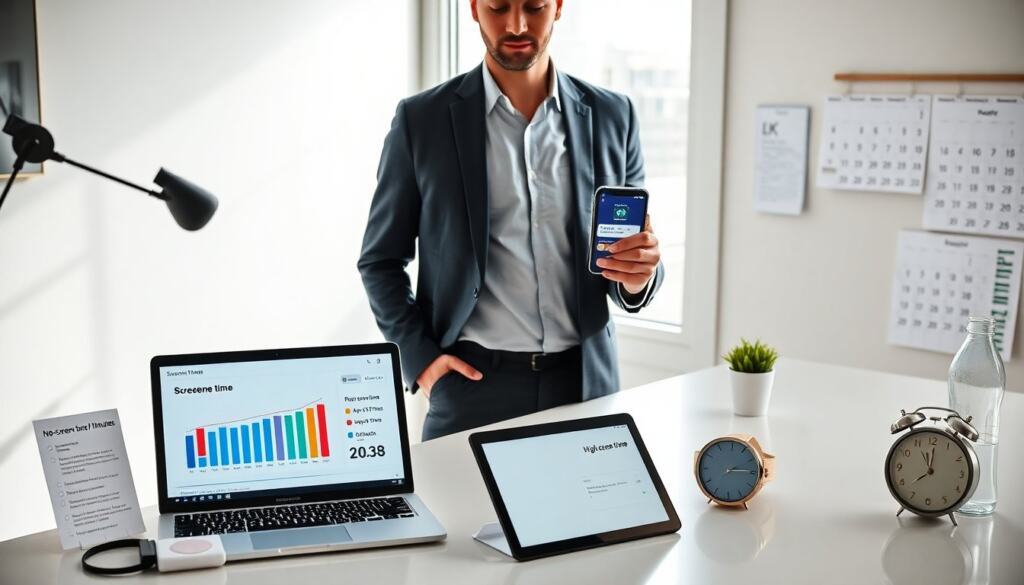
Use built-in screen timers on phones and tablets. They report daily and weekly totals. Use app limits to block heavy apps after a set time. Use a browser plugin to track time on websites. Use a wearable or phone motion sensor to confirm sitting time. Track these three metrics: total daily screen minutes, number of unlocks or checks, and longest continuous screen session. For a quick self-assessment, follow three steps. Step one: check average daily minutes from device settings. Step two: count average unlocks per day. Step three: note the hour of last screen use before sleep. If daily minutes exceed 180, unlocks exceed 50, or last use is within 60 minutes of sleep, label the pattern “high screen time.” Then set one clear goal, such as reduce daily minutes by 30% or cut unlocks in half. Recheck after one week and adjust targets.
Practical Strategies To Reduce Screen Time Without Missing Out
People can reduce high screen time while keeping key benefits. Start with rules for timing. Create a no-screen period for the first 60 minutes after waking. Create a no-screen period for the last 60 minutes before bed. Both rules protect focus and sleep. Next, simplify notifications. Turn off nonessential alerts and leave only messages that matter. Silence social and promotional alerts. Then, set app limits for the top two time sinks. Use app timers to stop use automatically. Replace passive browsing with a short habit. For example, read one article or walk for five minutes when tempted. People should batch small tasks. They should check email and messages at set times, not continuously. Use grayscale mode after work hours to reduce visual appeal. Move devices out of reach at night. Charge phones outside the bedroom. Use a basic alarm clock instead of a phone to wake. For work, use focused blocks. Work for 45 minutes, then take a 10-minute break without screens. Use a simple timer to guard those blocks. Share goals with a friend or colleague. Social accountability reduces high screen time. Finally, plan substitutes that satisfy the same need. If a person scrolls for social connection, call a friend. If a person checks news, pick one reliable update time. These swaps cut time while keeping value.