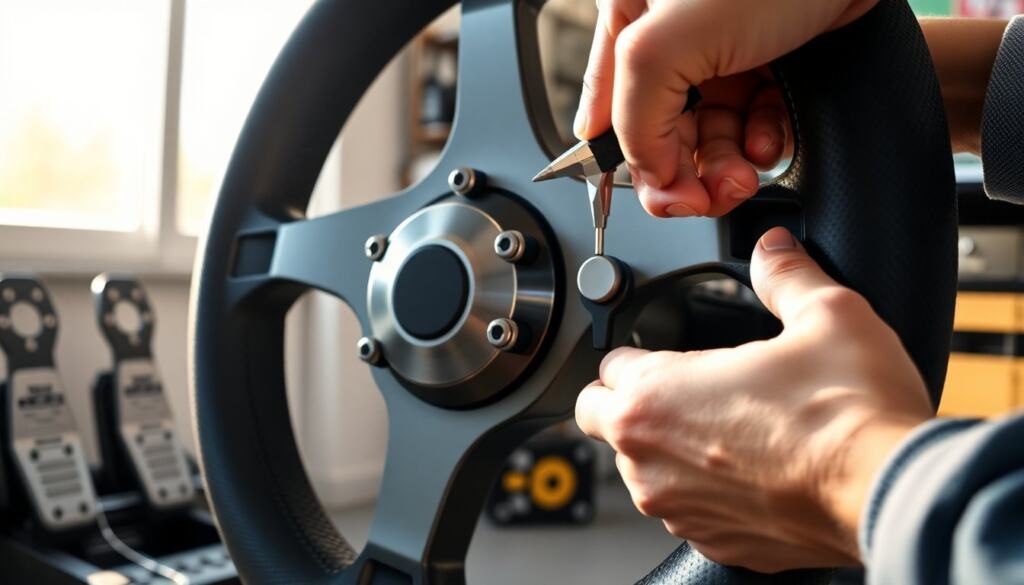
A direct drive wheel delivers force feedback by attaching a high-torque motor directly to the wheel hub, giving the most precise, immediate steering feel available for sim racing. It answers the needs of drivers seeking realistic weight transfer, nuanced road texture, and near-zero lag between input and sensation. This guide explains what a direct drive wheel does, how it compares to belt and gear systems, and practical setup and maintenance tips.
Key Takeaways
- A direct drive wheel connects a high-torque motor directly to the wheel hub, offering the most precise force feedback for sim racing.
- This setup provides stronger, clearer torque and lower latency compared to belt and gear drive wheels, enhancing immersion and control.
- Direct drive wheels require a sturdy rig and adequate power supply due to their powerful motor and force output.
- They offer superior feedback on road texture, grip cues, and transient events, benefiting serious sim racers seeking realism.
- Choosing the right torque level and ensuring compatibility with rims and pedals is crucial for optimal performance.
- Regular maintenance, including firmware updates and mechanical checks, helps sustain reliability and performance over time.
What Is A Direct Drive Wheel And How It Works
A direct drive wheel uses a motor mounted directly to the wheel hub or shaft so there’s no intermediate belt or gear train between the motor and the rim. That direct mechanical link is why these wheels produce stronger, more detailed force feedback and lower latency than other drive types.
Core components and principles
- Motor: typically a brushless or servomotor sized for continuous torque and heat tolerance.
- Encoder: measures wheel position precisely for quick, accurate feedback loops.
- Wheel hub and quick release: connects the rim to the motor shaft with minimal play.
- Drive electronics and firmware: interpret game telemetry and command the motor to reproduce forces.
Because the motor output is not reduced or filtered through belts or gears, the wheel transmits high-frequency vibrations (road texture) and rapid torque changes (snap oversteer, kerbs) much more faithfully. That fidelity comes at the cost of needing more power and stronger mounting, direct drive rigs are heavier and can deliver sudden, powerful forces, so a rigid wheel stand or dedicated rig is essential.
Why precision matters
Sim racers notice improvements in three areas: steering centering and return-to-center, micro-vibrations that cue surface grip, and clearer feedback during transient events like collisions. These gains make direct drive systems the preferred choice for enthusiasts and professionals who want the clearest connection between virtual tire behavior and their hands.
Benefits, Limitations, And Real-World Performance Compared To Belt And Gear Drives
Direct drive wheels outperform belt and gear systems in several measurable and experiential ways, but they aren’t a universal upgrade for every user. Below are the main differences and what they mean in practice.
Benefits
- Higher torque and fidelity: Direct drive offers stronger, cleaner torque and better rendering of subtle forces, improving immersion and control.
- Lower latency and less compliance: No belt stretch or gear lash means faster response and a tighter feel when inputs change quickly.
- Longevity: Fewer wear-prone transmission parts (belts, gears) can mean longer service life for the core drive.
Limitations
- Cost: Direct drive setups typically start well above midrange belt/gear wheels, with premium models and accessories adding significant expense.
- Power and mounting needs: They require robust power supplies and a solid rig: improper mounting can lead to vibration, rattles, or safety issues.
- Noise and heat: More powerful motors can generate audible noise and heat during long sessions.
Real-world performance
For lap time-focused drivers and sim pros, the clarity of direct drive can translate to faster, more consistent inputs because the driver senses grip transitions earlier. For casual players, the difference is noticeable but may not justify the extra cost and complexity, belt and gear wheels have improved and still provide excellent feedback at a much lower price.
When choosing between systems, consider how much time the user spends practicing, whether they run competitive leagues, and how much they value tactile accuracy versus budget and simplicity.
How To Choose, Install, And Maintain A Direct Drive Wheel
Choosing and installing a direct drive wheel requires attention to power, torque needs, compatibility, and safety.
How to choose
- Match torque to use: casual simmers can be happy with lower-torque models (10–20 Nm), while serious racers often opt for 20–30+ Nm for more realistic feel. Torque rating matters but so does continuous torque vs peak torque, prioritize continuous ratings.
- Check compatibility: confirm the wheelbase supports your preferred rims, pedals, and quick-release standards.
- Consider electronics: look for robust firmware, frequent updates, and wide software support for major sims.
Installation checklist
- Secure the rig: mount the wheelbase to a dedicated rig or heavy stand rated for high torque, loose mounts cause play or damage.
- Use the recommended power supply and wiring: undersized PSUs can trigger thermal throttling or shutdowns.
- Set software limits: configure angle of rotation, torque limits, and filter settings in both the wheel firmware and the sim to avoid abrupt forces.
- Test progressively: begin with low torque and short sessions, increasing force as confidence in mounting and settings grows.
Maintenance and troubleshooting
- Keep connectors and the quick release clean and free of debris: inspect for wear every few months.
- Monitor temperatures during long sessions: let the wheelbase cool if it becomes hot to the touch.
- Update firmware when manufacturers release validated updates, these often fix feel and reliability.
- If the wheel exhibits unexpected vibration or dead zones, check mounting bolts, the quick release, and encoder calibration: these address most mechanical issues.
A well-chosen and properly installed direct drive wheel delivers unmatched feedback and durability. With conservative initial settings and routine checks, most owners keep these systems reliable for years.
Frequently Asked Questions about Direct Drive Wheels
What is a direct drive wheel and how does it improve sim racing experience?
A direct drive wheel attaches a high-torque motor directly to the wheel hub, providing precise and immediate force feedback. This results in realistic steering feel, detailed road texture cues, and near-zero input lag, enhancing immersion and control for sim racers.
How does a direct drive wheel differ from belt and gear drive wheels?
Unlike belt or gear systems, a direct drive wheel has no intermediate parts between motor and rim. This reduces latency, eliminates compliance issues like belt stretch, delivers stronger torque, and better reproduces subtle forces for a more authentic driving experience.
What are the main benefits of using a direct drive wheel?
Direct drive wheels offer higher torque and force fidelity, lower latency, and longer service life due to fewer wear parts. They provide clearer, more accurate feedback that helps drivers feel surface grip and transient events like collisions more distinctly.
What should I consider when choosing a direct drive wheel?
Choose a wheel that matches your torque needs—casual users may prefer 10–20 Nm, while serious racers benefit from 20–30+ Nm continuous torque. Also, check compatibility with rims and pedals, power supply requirements, and software support to ensure optimal performance.
How do I properly install and maintain a direct drive wheel?
Mount the wheel on a solid, heavy rig suitable for high torque and use the recommended power supply. Set torque and rotation limits carefully in software, start with low forces, and increase gradually. Regularly clean connectors, monitor temperatures, update firmware, and check mounting bolts and calibration to maintain reliability.
Are direct drive wheels suitable for all sim racers?
Direct drive wheels excel for competitive and enthusiast sim racers valuing tactile accuracy and immersion. However, they are heavier, louder, more expensive, and require robust mounting—casual players might prefer belt or gear wheels that offer good feedback at a lower cost and complexity.