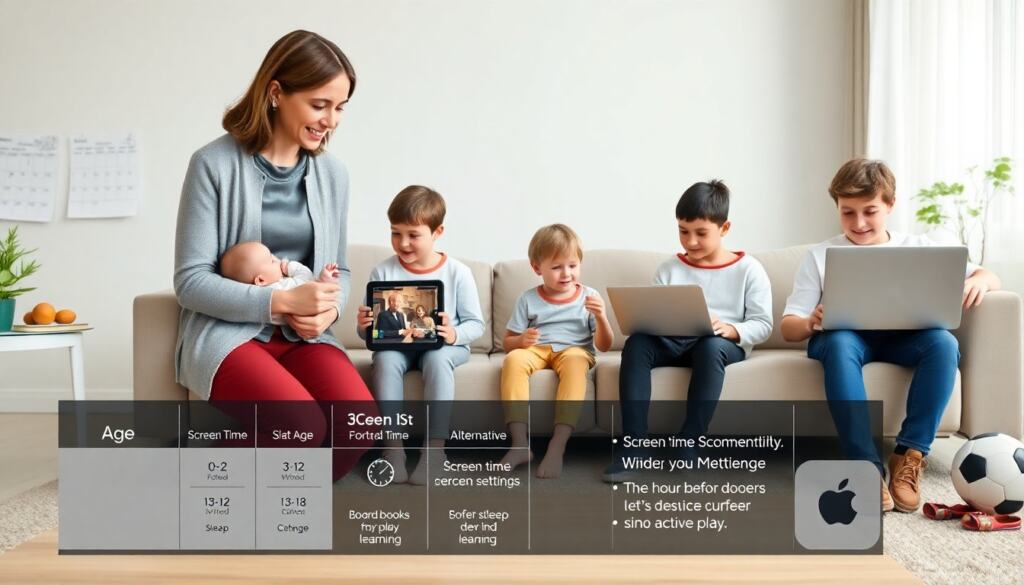
Screen time recommendations by age guide parents and caregivers in daily choices. The guide lists limits, describes quality screen use, and gives easy alternatives. It highlights sleep, play, learning, and family routines. The reader will get clear limits for infants, children, and teens. The guide will help families set simple rules that fit daily life.
Key Takeaways
- Screen time recommendations by age emphasize consistent rules and predictable schedules to support healthy habits for infants, children, and teens.
- Infants under 18 months should have no screen time except brief video calls, while toddlers may watch high-quality videos with caregiver interaction to promote learning.
- Children aged 3–12 should have daily screen limits—about 1 to 2 hours of recreational use—with a focus on educational content and tech-free zones to protect sleep and encourage active play.
- Teens benefit from flexible screen time boundaries that prioritize sleep by setting device curfews, encourage privacy awareness, and promote balanced use for creativity and social connection.
- Parents and caregivers should co-view content, use parental controls, and engage children in media discussions to build media literacy and safe, meaningful screen experiences.
Core Principles For Healthy Screen Use Across Ages
Families should use consistent rules for screen time recommendations by age. Caregivers should set predictable schedules. Children should get most screen time that supports learning or social connection. Screens should not replace sleep, physical activity, or family time. Devices should be away at meal times and at least one hour before sleep. Adults should model the habits they want children to follow. Quality matters. High-quality educational content should get priority in screen time recommendations by age. Interactive content that asks the child to respond has more value than passive viewing. Parents should co-view with young children to add context and questions. Devices should be used in shared spaces so caregivers can supervise. Screen settings should reduce autoplay and push notifications. Families should use timers and parental controls to keep to daily limits. Reassess rules after major life changes, such as school shifts or health events. The goal is steady routines that protect sleep, learning, and play while allowing safe screen use.
Infants And Toddlers (0–2 Years): Recommended Limits And Alternatives
For infants and toddlers, experts limit screen exposure. The top guidance on screen time recommendations by age says no screen time for children under 18 months, except for short video calls. For 18–24 months, caregivers may introduce high-quality video only when they watch with the child. Caregivers should speak and point during videos to link words with objects. Screens should not replace hands-on play. Parents should offer short, focused activities such as board books, blocks, and supervised floor play. Outdoor play, shared reading, and songs support language and motor skills. A simple rule works: prioritize real-world interaction over screens. If a caregiver uses a device, they should explain actions and keep it brief. Screen use should stay under strict limits and only include content designed for toddlers. Use devices for practical tasks like video calls with family rather than for long entertainment sessions. These steps align with screen time recommendations by age and support healthy early development.
Children (3–12 Years): Age‑Appropriate Daily Limits And Learning‑First Screen Time
Caregivers should set clear daily limits for school-age children. A common approach to screen time recommendations by age sets 1 hour a day for preschoolers and 1.5 to 2 hours for older children on non-school days. For school-aged children, screens for assignments do not count toward recreational limits. Families should make learning-first choices when possible. Educational games, read-aloud apps, and creative tools should get priority. Parents should keep screens out of bedrooms to protect sleep. Use parental controls to block age-inappropriate content. Encourage breaks every 30 to 45 minutes during long sessions. Add active alternatives such as sports, art, and family games. Set tech-free zones and times, for example during assignments and at dinner. Teach children to evaluate content. Ask simple questions after a show, such as “What did you learn?” or “How did that make you feel?” Those questions help kids reflect and build media literacy. Revisit limits as the child grows and as school demands change. These steps follow screen time recommendations by age and keep learning central.
Teens (13–18 Years): Boundaries, Sleep, Social Media, And Balanced Use
Teens need clear boundaries and flexible rules. Screen time recommendations by age for teens focus on sleep, privacy, and balance. Many teens use screens for school, social life, and hobbies. Families should set nightly device curfews to protect sleep. A device curfew of 30 to 60 minutes before bed helps the body prepare for sleep. Social media can support social ties but can also increase anxiety. Teens should discuss online stress with a trusted adult. Parents should support privacy while staying aware of major risks, such as harassment or extreme content. Encourage teens to use screens for creative projects and skill building. Set shared family rules for group activities and driving. Teach time management skills, such as setting app timers and tracking overall use. Ask teens to show their favorite apps and explain why they like them. That practice builds trust and media literacy. Adjust limits as the teen shows responsibility. These steps follow screen time recommendations by age and aim to keep sleep, safety, and growth in balance.