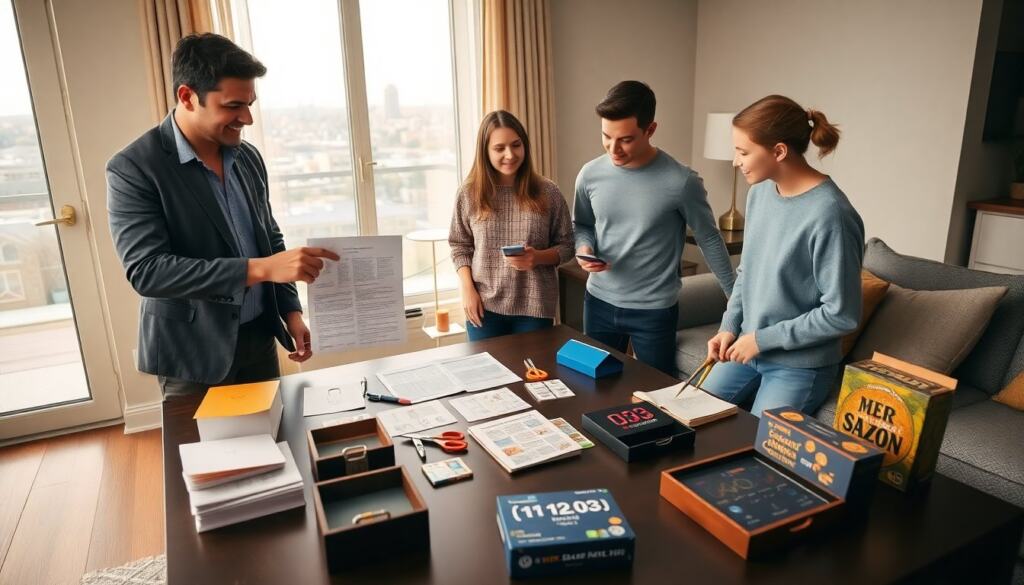
Escape room games for home offer clear puzzle play for friends and families. The guide explains types, difficulty levels, and needed materials. It shows quick options to play tonight. It gives hosting tips for a smooth, fun night.
Key Takeaways
- Escape room games for home engage players through themed puzzles and clues, providing an immersive experience for friends and families.
- There are three main types: printable adventures for quick setup, DIY kits for customization, and ready-made boxed games for minimal prep.
- Selecting the right difficulty and theme based on players’ experience enhances enjoyment and prevents frustration in home escape room games.
- Hosts should test puzzles beforehand, arrange clues logically, and use a clear hint system to maintain game flow and player engagement.
- Timing is crucial—setting a 45–75 minute window with visible timers and balancing solo and group puzzles optimizes challenge and participation.
- Creating atmosphere with thematic elements and conducting a post-game debrief helps improve future escape room games for home.
How Home Escape Games Work: Types, Difficulty Levels, And Materials
Escape room games for home work by using clues, locks, and puzzles to create a goal. A host sets a start and a final objective. Players solve a chain of tasks to reach the final key or code. Designers build scenes around a theme. Themes can match mystery, spy work, horror, or family fun.
Types of escape room games for home fall into three groups. First, printable adventures use paper clues, cut-outs, and PDFs. They cost little and they scale by player count. Second, DIY kits use household items like boxes, timers, and simple locks. They let a host customize difficulty. Third, boxed games arrive ready-made with props and instructions. They often include physical locks, cards, and a narrative.
Difficulty levels for escape room games for home range from easy to expert. Easy games use direct clues and short chains. Medium games layer clues and hide answers. Hard games include red herrings and multi-step puzzles. A host should match the level to players’ experience. Families with kids pick easy or medium. Experienced players enjoy medium or hard.
Materials for escape room games for home stay simple. A host needs paper, pens, and tape. A few locks, envelopes, and small props add weight. A smartphone or tablet can serve as a timer and sound source. For printable adventures, a printer and scissors suffice. For boxed games, the host follows the included list. Many games add UV pens, magnet sets, or cryptex-style props. A host can substitute with coins, jars, and glued labels.
A clear tip helps every host. Test each puzzle before play. A host runs through the game to confirm timing and clue order. This step prevents dead ends and keeps players engaged.
Easy DIY Kits, Printable Adventures, And Ready-Made Boxed Games To Try Tonight
Many players choose escape room games for home that they can start the same evening. Printable adventures offer the fastest setup. A host downloads a PDF, prints pages, and cuts pieces. The host arranges clues across rooms and sets a one-hour timer. Printable options often include answer keys and hint cards. A host can hide clues inside books, under rugs, and in drawers.
DIY kits suit hosts who want a low-cost, hands-on option. A DIY host gathers envelopes, labels, cheap padlocks, and small props. The host writes riddles on cards and numbers each clue for flow. A simple gear uses color codes, math puzzles, and word locks. A DIY kit can use smartphones for coded audio messages or simple QR codes that link to hints. A host can reuse props across themes.
Ready-made boxed games simplify play. A boxed set delivers props, cards, and rules. Players follow the story and solve bundled puzzles. Many boxed games include four to six puzzles that take 45–90 minutes. A boxed game often removes prep work and reduces setup mistakes. A host still benefits from a quick read-through to learn hint triggers and solution paths.
Cost and time vary across formats. Printable adventures cost little and require 15–45 minutes of setup. DIY kits cost the host more time but can use household supplies. Boxed games cost more but save time. Each format supports different player counts. A host checks player capacity on the product page or in the guide file.
To pick a strong option, a host matches theme and difficulty to the group. Families pick light themes and shorter timers. Adult groups pick darker themes and longer sessions. A clear choice improves fun and reduces frustration.
How To Host A Memorable At-Home Escape Night — Setup, Timing, And Puzzle Flow Tips
A host plans escape room games for home with short, clear steps. First, a host chooses a theme and a difficulty. Second, a host gathers materials and tests each puzzle once. Third, a host sets a clear start time and a visible timer.
Setup matters. A host arranges clues in logical order. A host labels stages with small numbers if players need structure. A host hides the final key or code in a place that rewards teamwork. A host creates a hint system with three hints. A hint system uses progressive help: nudge, clearer hint, direct answer. The host offers hints on request to keep momentum.
Timing matters. Most escape room games for home fit a 45–75 minute window. A host sets a middle ground at 60 minutes. The host announces the time and resets the timer visibly. The host pauses clocks during snack breaks to avoid rule disputes.
Puzzle flow matters. A host balances independent tasks and group tasks. A host gives one puzzle that a single player can finish and one puzzle that requires three people. This mix keeps shy players involved and active players challenged. A host avoids long puzzles that need a single missing item. A single missing item can stall the whole group.
A host manages difficulty with small scaffolds. A host adds check-ins every 15 minutes. The host offers the first hint after 20 minutes if the team stalls. The host uses a scoring system for competitive nights. A host gives points for time left and for using fewer hints.
Atmosphere helps immersion. A host uses soundtracks, low lighting, and themed snacks. A host keeps safety in mind and avoids risky setups. A host confirms no small choking hazards around children.
After play, a host debriefs. A host asks what puzzles players liked and which clues felt unfair. The host records notes to improve the next game. This short loop raises quality for future escape room games for home.